Skip to content
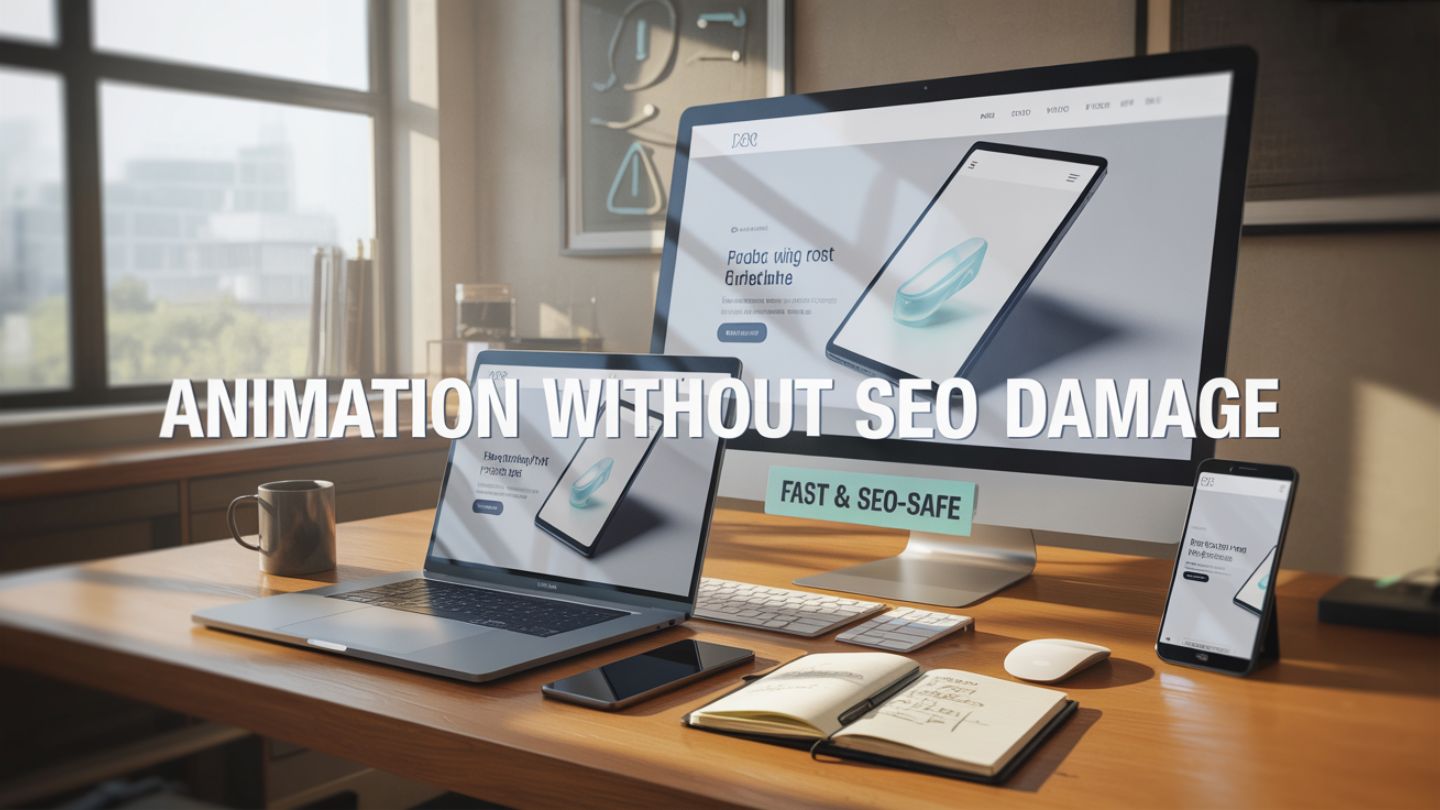
Animation plays a growing role in shaping how users experience websites. When used strategically, it helps guide attention, clarify interactions, and create a more engaging digital presence. However, when animation is added without performance or structure in mind, it can slow pages down and negatively impact search visibility. The key lies in understanding how to balance creative motion with technical best practices so that SEO remains intact.
In this blog, we will see how modern websites must satisfy both users and search engines. While animation enhances visual appeal, factors such as speed, accessibility, and content clarity determine whether a site ranks well. Businesses investing in thoughtful website design for long-term growth need to ensure that animation supports usability rather than competing with it.
Key Takeaways
- Lightweight animation techniques such as CSS transitions and vector-based assets help maintain fast load times, which directly supports better SEO performance.
- Purpose-driven animations enhance user interaction and navigation, keeping visitors engaged without distracting them from the main content.
- Loading essential content before applying animations ensures pages remain crawlable, accessible, and optimized for search engines.
- Designing animations with accessibility in mind, including reduced-motion preferences, improves usability for all users and aligns with SEO best practices.
- Continuous performance testing helps identify animation-related issues early, ensuring visual enhancements never compromise site speed or rankings.
How Animation Affects Search Performance
Search engines increasingly measure user experience signals such as page speed, engagement, and bounce rate. Heavy animations that rely on large scripts or unoptimized assets can delay content loading and frustrate users, leading to poorer performance metrics.
From a technical standpoint, animation should never interfere with how content is crawled or indexed. Clean structure and efficient rendering are essential components of reliable website development practices, especially when animation is involved. When motion blocks or delays meaningful content, SEO performance can suffer.
Choose Lightweight Animation Methods
One of the safest ways to integrate animation without harming SEO is to prioritize lightweight solutions. CSS-based animations are generally more efficient than JavaScript-heavy alternatives, as they allow browsers to render motion smoothly with minimal processing overhead.
For more advanced effects, vector-based animations offer a balance between visual quality and performance. These approaches are commonly used in projects that emphasize user-focused UI and UX design, where responsiveness and clarity are just as important as aesthetics.
Before adding any animation, ask whether it serves a clear purpose. If motion does not improve understanding, navigation, or interaction, it may be unnecessary.
Keep Animation Aligned With Usability
Animation should guide users, not distract them. Subtle transitions can indicate hierarchy, reinforce feedback, or help users understand how elements relate to one another. For example, gentle hover effects can clarify clickable areas, while small transitions can make navigation feel smoother.
When animation supports interaction, it can also improve engagement signals that indirectly benefit SEO. This is particularly important for businesses refining their search engine optimization strategy, where user behavior plays a role in long-term visibility.
Overusing animation, however, can overwhelm users and reduce readability. The goal is to enhance the experience without pulling attention away from the content itself.
Design With Accessibility in Mind
Not all users experience motion the same way. Some may have motion sensitivity or cognitive challenges that make excessive animation uncomfortable. Respecting reduced-motion preferences and avoiding unnecessary effects creates a more inclusive experience.
Accessibility is closely tied to usability and SEO. Websites that consider accessibility as part of their design process often perform better overall. This aligns naturally with principles of creating user-friendly digital experiences, where comfort and clarity take priority over excessive visual effects.
Search engines reward sites that are accessible, fast, and easy to navigate , making accessibility-aware animation a smart choice.
Load Content Before Enhancing It
A proven approach to SEO-safe animation is progressive enhancement. This means ensuring that essential content loads first, while animation is layered in afterward. Search engines can then easily crawl and index the page without waiting for scripts to execute.
This strategy is especially valuable when animation supports content-heavy pages, such as those focused on identifying content gaps to improve SEO performance, where visibility and clarity are critical. When content is immediately accessible, animation becomes an enhancement rather than a barrier.
Use Motion Intentionally
Animation should respond to user behavior rather than run continuously in the background. Scroll-based effects, hover states, and click-triggered animations feel more natural because they occur when users expect feedback.
This intentional use of motion helps maintain performance while still delivering a polished experience. It also prevents distraction on informational pages, including those discussing building authority through digital PR efforts, where focus and readability matter.
Lazy-loading animations that appear further down the page can further reduce performance strain while preserving visual interest.
Monitor Performance and Iterate
Animation decisions should always be informed by data. Performance testing tools can reveal whether motion is affecting load times or engagement metrics. If users are leaving pages quickly, animation may be slowing things down or competing with content.
Regular testing ensures that animation continues to support , not undermine , content goals. This is particularly relevant when animation complements educational or strategic content, such as explaining the importance of quality web design for business growth, where trust and clarity are key.
Final Thoughts
Animation can elevate web experiences when it is implemented with intention, restraint, and technical awareness. Throughout this blog, we explored how thoughtful animation choices can enhance user engagement while maintaining fast load times, accessibility, and crawlability. By prioritizing performance-friendly techniques, purposeful motion, and progressive enhancement, businesses can enjoy the benefits of animation without compromising SEO or user experience.
At The Ocean Marketing, we believe that successful Website Design & SEO go hand in hand. Animation should never be added blindly; it must be aligned with usability, performance metrics, and search visibility. If you’re unsure whether animations on your site are helping or hurting your rankings, starting with a professional SEO Audit can provide clarity. You can take advantage of our Free SEO Audit to identify performance gaps, animation-related issues, and optimization opportunities by visiting. If you’re looking to introduce animation while protecting search visibility, our team can help. We specialize in creating websites that balance creativity with performance. Let us help you design an engaging, SEO-friendly website. Reach out to us and contact us to get started.