Skip to content
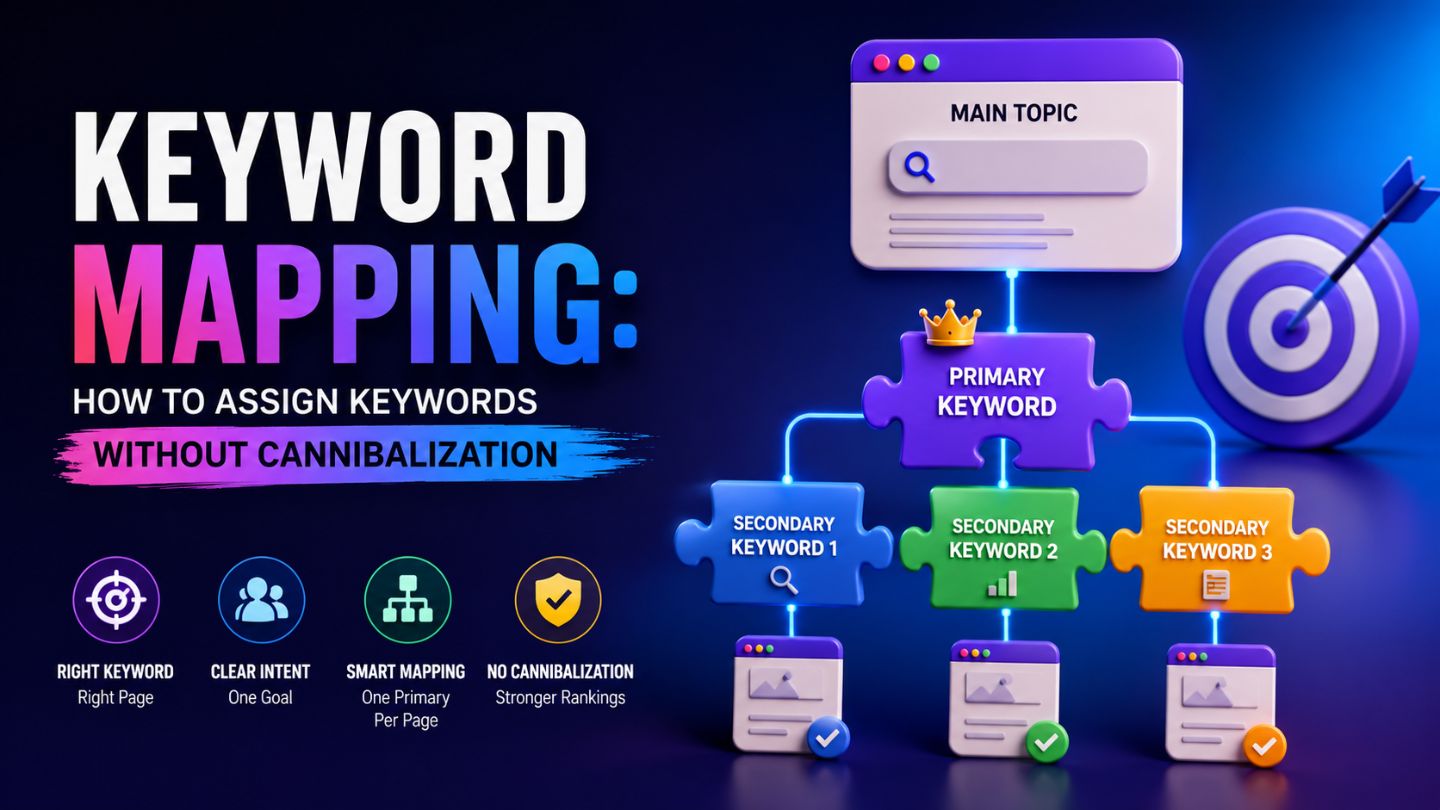
Keyword mapping is one of the easiest ways to keep an SEO strategy organized, yet it’s often overlooked. As websites grow, it’s common for multiple pages to target similar keywords, creating unnecessary competition and making it harder for search engines to determine which page should rank. A structured keyword map helps prevent this issue by assigning clear keyword targets to individual pages. In this blog, we’ll discuss how keyword mapping works, why it matters for SEO, and how to assign keywords effectively without causing keyword cannibalization. By the end, you’ll have a practical framework for building a more focused content strategy.
Key Takeaways
- Keyword mapping assigns specific keywords to specific pages.
- Proper mapping helps prevent keyword cannibalization.
- Every page should target a unique primary keyword.
- Search intent plays a major role in keyword assignment.
- A keyword map improves content planning and site structure.
- Regular audits help identify and fix overlapping content.
What Is Keyword Mapping and Why Does It Matter?
Keyword mapping is the process of assigning target keywords to specific pages on a website. Instead of multiple pages competing for the same search query, each page is given a clear keyword focus that aligns with its purpose and content. This creates a more organized SEO strategy and helps search engines understand which page should rank for a particular topic.
Without keyword mapping, websites often end up publishing content based on ideas rather than strategy. Over time, this can lead to several pages targeting similar keywords, creating confusion for both users and search engines. A keyword map acts as a blueprint that connects content topics, keywords, and URLs in a way that supports stronger rankings and a better user journey.
Understanding Keyword Cannibalization

Keyword cannibalization happens when two or more pages on the same website target identical or highly similar keywords. Rather than helping your rankings, these pages compete against each other in search results. As a result, search engines may struggle to determine which page is the most relevant, causing ranking fluctuations or weaker performance overall. For a deeper look at how overlapping pages compete in search results, understanding what keyword cannibalization means for SEO performance can help clarify why keyword mapping is so important.
This issue is more common than many businesses realize. It often develops gradually as websites add blogs, service pages, product pages, or landing pages without a long-term keyword strategy. Even well-written content can underperform if multiple pages are unintentionally competing for the same search intent.
Common Signs of Keyword Cannibalization
- Multiple pages ranking for the same keyword
- Frequent ranking changes between similar pages
- Organic traffic spread across competing URLs
- Difficulty improving rankings despite content updates
- Search engines showing the wrong page for a target query
Start With Keyword Research Before Mapping
Effective keyword mapping begins with thorough keyword research. Before assigning keywords to pages, you need a clear understanding of what your audience is searching for and how those searches relate to your business offerings. This foundation helps ensure that each page targets terms with genuine search demand and relevance.
During the research process, group keywords based on themes, search intent, and business goals. Rather than focusing only on high-volume keywords, consider how different terms fit within the customer journey. Informational searches may be better suited for blog content, while transactional searches often belong on service or product pages.
Read More: Why Use AI for Keyword Research in Modern SEO?
Organize Keywords by Search Intent
One of the most effective ways to avoid cannibalization is by understanding search intent. Two keywords may appear similar, but can serve completely different user needs. When pages are mapped according to intent, it becomes easier to create content that addresses specific search goals without overlapping. Since every keyword reflects a different user goal, learning why search intent matters in SEO strategy can make keyword assignments more accurate and useful.
For example, someone searching for “keyword mapping guide” likely wants educational information, while a search for “keyword mapping services” suggests a commercial intent. These terms should typically be assigned to different pages because the user’s expectations and desired outcomes are different.
Main Search Intent Categories
- Informational: Users want to learn something.
- Navigational: Users are looking for a specific website or brand.
- Commercial: Users are researching options before making a decision.
- Transactional: Users are ready to take action or make a purchase.
Assign One Primary Keyword Per Page
A common mistake is trying to optimize a single page for multiple unrelated primary keywords. While it’s natural to include supporting variations and related terms, every page should have one primary keyword that serves as its main focus. This creates a clear signal for search engines and reduces the risk of content overlap.
Once a primary keyword is assigned, secondary keywords can be added naturally throughout the content. These supporting terms help expand topical relevance without changing the page’s core purpose. Maintaining this hierarchy makes your keyword map easier to manage and scale over time.
Build Topic Clusters Instead of Creating Similar Pages
Modern SEO increasingly rewards topical authority. Rather than publishing multiple pages that cover nearly identical subjects, it’s often more effective to create topic clusters. A cluster consists of a central pillar page supported by related content pieces that explore subtopics in greater detail. This structure allows each page to target unique keywords while strengthening the authority of the overall topic.
Internal links connect related content, helping search engines understand relationships between pages and reducing the likelihood of cannibalization. For example, a pillar page about SEO strategy could link to supporting articles covering keyword mapping, technical SEO, on-page optimization, and link building. Each page has its own keyword focus while contributing to a broader content ecosystem.
Create a Keyword Mapping Spreadsheet

A keyword mapping spreadsheet provides a practical way to organize your SEO efforts. It serves as a central reference document where keywords, URLs, content types, and search intent are tracked in one place. This makes it easier to identify overlaps before new content is published.
Your spreadsheet doesn’t need to be overly complex. The goal is visibility and consistency. By documenting keyword assignments, content teams can quickly see which topics are already covered and which opportunities remain available for future content development.
Useful Columns to Include
- Target URL
- Primary keyword
- Secondary keywords
- Search intent
- Content type
- Search volume
- Ranking status
- Notes or optimization opportunities
Review Existing Content Before Publishing New Pages
Before creating new content, take time to review what already exists on your website. Many cannibalization problems occur because teams forget about older pages or fail to assess whether a similar topic has already been covered. A content audit helps identify duplicate topics, overlapping keywords, and opportunities to improve existing pages instead of creating new ones.
In some cases, updating and expanding an older page may produce better results than launching another competing article. This approach also helps preserve link equity and authority. Rather than splitting SEO value across multiple pages, you can consolidate efforts into stronger, more comprehensive content that serves users more effectively.
Use Internal Linking to Reinforce Keyword Targets
Internal linking supports keyword mapping by establishing relationships between pages and clarifying content hierarchy. When links are strategically placed, they guide users toward relevant information while helping search engines understand which pages are most important for specific topics. Anchor text also plays a role. Using descriptive anchor text that aligns with a page’s target topic can reinforce keyword relevance without over-optimization.
Combined with a clear keyword map, internal linking creates a more structured and understandable website architecture. The goal is not to force keywords into every link but to create logical pathways that support both navigation and SEO performance. A strong internal linking strategy complements keyword mapping and helps reduce confusion between related pages. A strong keyword map becomes even more effective when paired with internal linking that improves SEO and site authority across related pages.
Keep Your Keyword Map Updated

Keyword mapping should not be treated as a one-time task. Websites evolve, content grows, and search trends change over time. A keyword map that worked perfectly a year ago may need adjustments as new services, products, and content opportunities emerge. Regular reviews help ensure that keyword assignments remain relevant and that new content fits within the existing structure.
Monitoring rankings, traffic patterns, and content performance can reveal potential cannibalization issues before they become significant problems. By maintaining an updated keyword map, businesses can continue expanding their websites without sacrificing SEO clarity. This proactive approach supports sustainable growth and helps maximize the value of every page published.
Read More: What Are the Benefits of Regular Rank Tracking for SEO Growth?
Final Thoughts
Keyword mapping is more than an organizational exercise—it is a strategic process that helps websites build stronger SEO foundations. By assigning keywords thoughtfully, understanding search intent, and maintaining a clear content structure, businesses can reduce competition between their own pages and improve overall search visibility. The result is a website that is easier for both users and search engines to navigate and understand.
At The Ocean Marketing, we help businesses create effective SEO strategies that support long-term growth and stronger search performance. Whether you need help with keyword mapping, content planning, or a free SEO audit, our team can provide practical recommendations tailored to your website. Contact us today to learn how we can help improve your online visibility and SEO results.