Skip to content
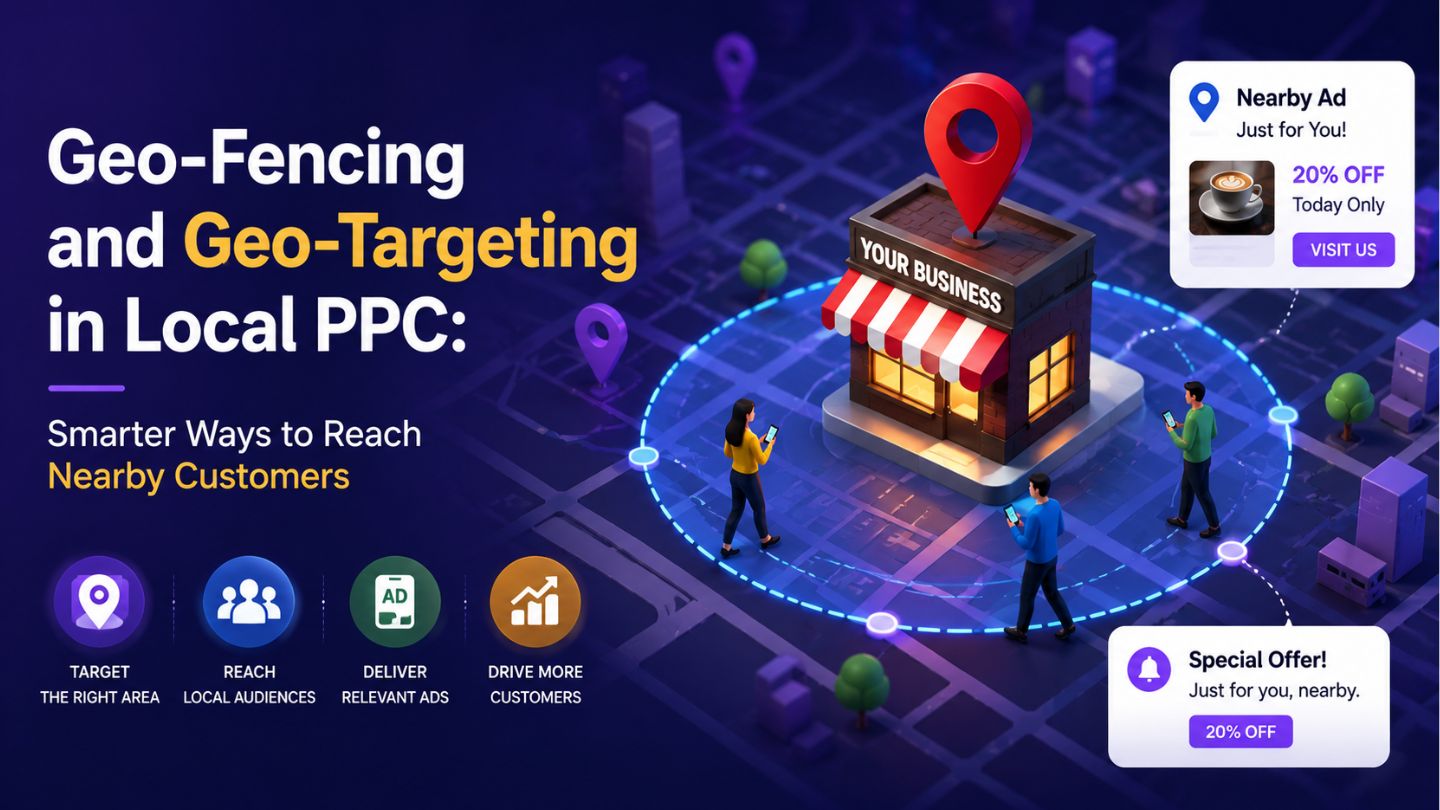
Local businesses can no longer afford to waste ad spend on people who are too far away or unlikely to convert. That’s where geo-fencing and geo-targeting become powerful tools in local PPC campaigns. Instead of showing ads to broad audiences, businesses can focus on people in specific areas, neighborhoods, or even near competitor locations. In this blog, we’ll discuss how geo-fencing and geo-targeting work, where they fit into local PPC strategies, and why they matter for businesses trying to attract nearby customers and improve ad performance.
Key Takeaways
- Geo-targeting helps businesses show ads in selected locations
- Geo-fencing uses virtual boundaries to reach people in real time
- Local PPC campaigns become more cost-effective with location filtering
- Businesses can target competitor locations and high-intent audiences
- Better location targeting often leads to higher conversion rates
- Mobile users are a major audience for geo-focused PPC campaigns
Why Location Matters More in PPC Today
People search differently now than they did a few years ago. Many searches happen on mobile devices while users are actively looking for nearby services, restaurants, stores, or businesses. Someone searching for “coffee shop near me” or “emergency plumber” usually wants quick local results, not businesses located an hour away. That shift has made location-based PPC strategies much more important.
Geo-targeting and geo-fencing help businesses stay visible in the moments that matter most. Instead of spending money on broad traffic that may never convert, advertisers can focus on nearby users who are more likely to act. This makes campaigns more efficient while also improving customer relevance.
Understanding Geo-Targeting in Local PPC
Geo-targeting is the process of showing ads to users based on their geographic location. Businesses can target entire cities, ZIP codes, neighborhoods, or a radius around a location. Platforms like Google Ads allow advertisers to narrow campaigns so their ads only appear in specific areas where their ideal customers live or search. This strategy is especially useful for businesses with physical locations or defined service areas.
A local dentist, restaurant, law firm, or repair company doesn’t need clicks from people outside its operating region. Geo-targeting helps control budget spending while increasing the chances of attracting qualified leads. Businesses that want to go deeper can also use advanced geo-targeting strategies for local PPC campaigns to refine audience reach by behavior, proximity, and search intent.
Common Geo-Targeting Options Businesses Use
- City-level targeting
- ZIP code targeting
- Radius targeting
- State or regional targeting
- Exclusion zones to avoid irrelevant traffic
- Location-based bid adjustments
What Makes Geo-Fencing Different?
Geo-fencing takes location targeting a step further. Instead of targeting broad regions, it creates a virtual boundary around a very specific area. When someone enters that boundary with their mobile device, they can become part of a target audience for ads. For example, a gym could set up a geo-fence around a competing fitness center. People who enter that location may later see promotional ads for discounted memberships or free trials. Retail stores, restaurants, and event venues often use geo-fencing to reach users at moments when buying intent is already high.
Read More: PPC Funnel Mapping: How to Align Ads With Funnel Stages
Many businesses use geo-fencing to attract nearby customers during peak decision-making moments. A restaurant may target users attending a sports event nearby. A car dealership might target people visiting competing dealerships. Even medical clinics use geo-fencing to reach nearby patients searching for immediate services.
The real strength of geo-fencing lies in timing and relevance. Ads appear when users are physically close to locations tied to their interests or needs. This often creates stronger engagement because the messaging feels timely instead of random. When combined with compelling ad copy, geo-fencing can significantly improve click-through and conversion rates.
The Role of Mobile Search in Geo-Based PPC
Mobile search behavior is one of the biggest reasons geo-targeted PPC campaigns perform so well. People constantly search while commuting, shopping, traveling, or comparing local options. Businesses that appear during those searches gain a major visibility advantage.
Google also prioritizes local intent in many search results. If someone searches for a service nearby, location relevance heavily influences which ads and listings appear first. Businesses using geo-targeting properly often gain stronger local exposure, while competitors with broader campaigns may lose visibility.
Mobile-Focused PPC Benefits
- Higher local search visibility
- Better click-through rates
- Faster customer actions
- Improved in-store traffic
- More accurate audience targeting
How Geo-Targeting Improves PPC Budget Efficiency

One of the biggest PPC mistakes businesses make is targeting audiences that are too broad. Broad campaigns often generate clicks from users who have little chance of converting. That wastes budget and reduces overall campaign performance. Geo-targeting helps eliminate that problem by narrowing the audience to areas that actually matter. A local service business can focus only on the neighborhoods it serves.
A retail store can target nearby shoppers instead of paying for traffic from distant cities. This level of precision often lowers wasted spend and increases return on investment. This also supports PPC campaigns focused on higher-quality leads, where every click is more likely to come from a relevant local customer.
Using Competitor Locations Strategically
Targeting competitor locations has become a popular geo-fencing strategy for local businesses. It allows brands to reach people already interested in similar products or services. Since those users are actively engaging with competitors, they often represent high-intent audiences. However, success depends heavily on the ad messaging. Businesses should avoid aggressive or negative ads and instead focus on offering something valuable. Discounts, convenience, unique services, or better customer experiences usually perform much better than direct competitor criticism.
Creating Better Ads for Geo-Based Campaigns
Location-based PPC campaigns work best when the ad copy feels relevant to the audience’s surroundings. Generic messaging usually performs poorly because users expect localized relevance. Mentioning neighborhoods, nearby landmarks, or city-specific offers can improve engagement significantly.
Strong calls-to-action also matter. Since many local searches happen with immediate intent, ads should encourage quick actions like calling, visiting, booking, or requesting directions. Businesses that simplify the next step often see better conversion rates from local PPC traffic.
Examples of Effective Local PPC Messaging
- “Visit our downtown showroom today.”
- “Serving families across the local area.”
- “Only 5 minutes from your location.”
- “Book same-day service near you.”
- “Exclusive offer for local customers.”
Challenges Businesses Should Watch For
While geo-targeting and geo-fencing offer strong advantages, they still require careful setup and monitoring. Poor targeting settings can accidentally limit reach too much or include irrelevant audiences. Businesses also need accurate location data to avoid wasting budget. Privacy concerns are another important consideration. Consumers are becoming more aware of how location data is used in advertising. Businesses should focus on ethical targeting practices and avoid messaging that feels invasive or overly personal.
Measuring the Success of Geo-Based PPC Campaigns

Tracking performance is essential for improving local PPC campaigns over time. Businesses should monitor more than just clicks. Metrics like calls, store visits, appointment bookings, and local conversions provide a clearer picture of campaign effectiveness. To judge results more clearly, businesses should also understand the key factors that influence PPC campaign success, from ad quality to targeting and landing page experience.
Location-based insights can also reveal which neighborhoods or regions perform best. That information helps advertisers refine budgets, improve targeting, and adjust messaging for better results. Over time, geo-focused PPC campaigns often become more efficient because businesses learn exactly where their strongest customers come from.
Metrics Worth Tracking
- Cost per conversion
- Local click-through rate
- Store visit conversions
- Phone call volume
- Direction requests
- Mobile engagement rates
Geo-Targeting vs. Geo-Fencing: Which Is Better?
Neither strategy is universally better because they serve different purposes. Geo-targeting works well for broader local campaigns where businesses want consistent visibility across defined regions. It’s reliable, scalable, and easier to manage for many local advertisers. Geo-fencing is more aggressive and highly focused. It works best for businesses targeting real-time local behavior or competitor locations. Some businesses even combine both strategies together. They use geo-targeting for ongoing visibility while running geo-fencing campaigns during promotions, events, or seasonal campaigns.
Read More: Google Ads: Ad Scheduling Strategies for Maximum ROI
Final Thoughts
Geo-fencing and geo-targeting have changed the way local businesses approach PPC advertising. Instead of relying on broad campaigns that reach everyone, businesses can now focus on nearby audiences with stronger purchase intent. That creates more relevant ads, better engagement, and smarter budget usage. As mobile search behavior continues to grow, location-based PPC strategies will only become more valuable for businesses competing in local markets.
At The Ocean Marketing, we help businesses build smarter PPC strategies that attract the right local audience without wasting ad spend. Whether you want to improve local visibility, increase conversions, or get a free SEO audit alongside your paid advertising strategy, our team can help you create campaigns designed for real business growth. Contact us to learn how we can strengthen your local digital marketing performance.