Skip to content
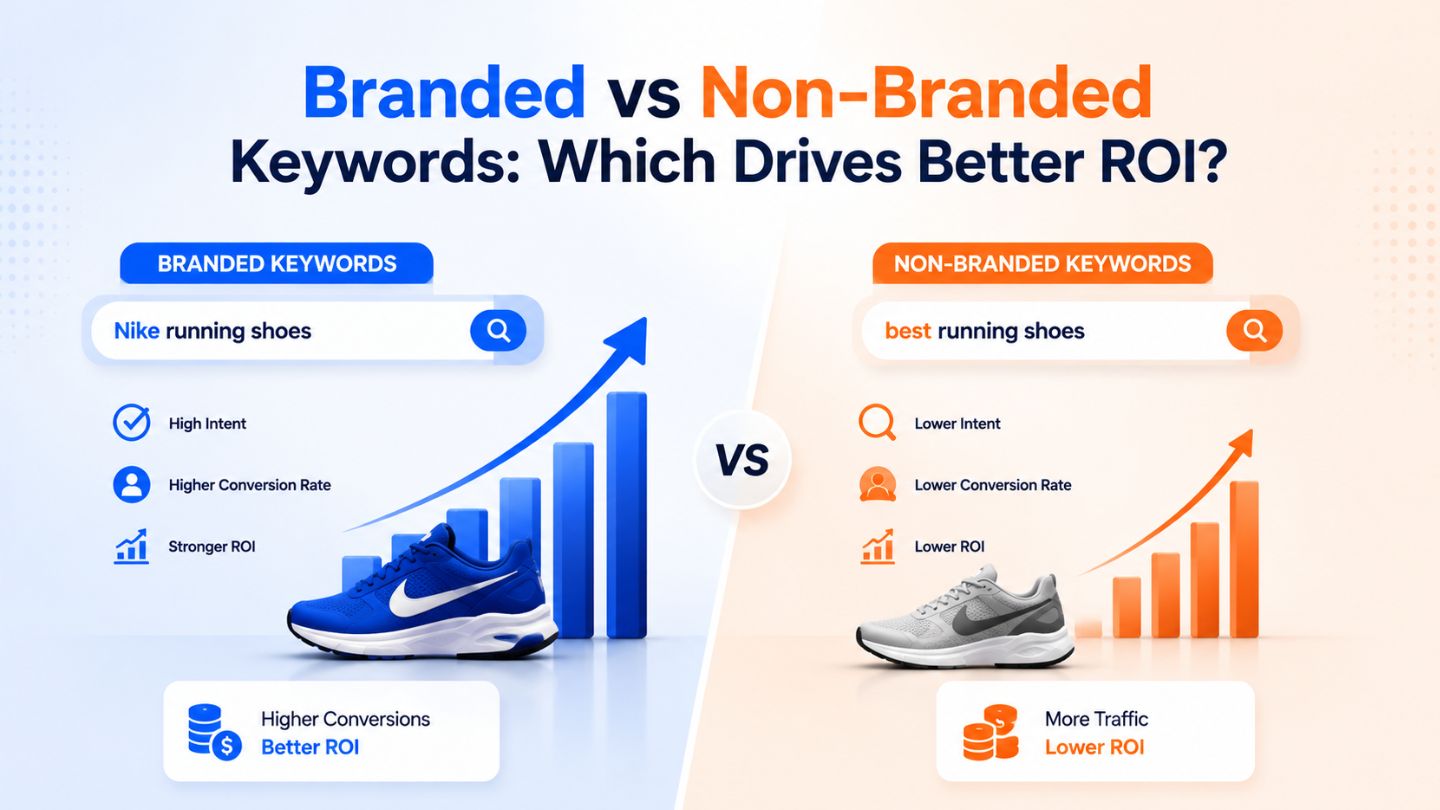
Building a successful digital marketing strategy requires understanding how different keyword types influence traffic, conversions, and long-term growth. This blog outlines the key differences between branded and non-branded keywords, how they affect search visibility, and which delivers better ROI for businesses aiming to improve online performance. While branded keywords often attract high-intent audiences already familiar with a company, non-branded keywords help businesses reach new potential customers searching for products or services. Knowing how to balance both can strengthen marketing campaigns, improve lead generation, and create a stronger presence in competitive search results across industries.
Key Takeaways
- Branded keywords target users already familiar with a business or brand.
- Non-branded keywords help attract new audiences searching for solutions.
- Branded searches usually have higher conversion rates and lower competition.
- Non-branded keywords improve reach, visibility, and long-term growth.
- ROI depends on business goals, industry competition, and audience intent.
- A balanced keyword strategy often delivers the strongest SEO performance.
- Tracking keyword performance helps businesses refine marketing investments.
- Search intent plays a major role in determining keyword effectiveness.
Understanding Branded Keywords
Branded keywords are search terms that include a company name, product name, or a specific branded phrase connected to a business. These keywords are often used by people who already know about the company through advertisements, social media, referrals, or previous interactions. Searches such as “a trusted sportswear brand” or “a business software platform” are examples of branded keywords because they directly reference a recognizable brand. Businesses often rely on branded searches to capture high-intent traffic from users already close to making a purchase decision, especially when brand mention for SEO signals has already helped build familiarity and trust across search results.
One of the biggest advantages of branded keywords is their ability to generate stronger conversion rates. Since users already recognize the business, trust levels are typically higher compared to first-time visitors. Branded keywords also tend to face lower competition in search engines, making it easier for companies to secure top rankings. However, businesses that depend only on branded searches may struggle to reach new audiences because these keywords mainly target people already familiar with the brand.
What Are Non-Branded Keywords?
Non-branded keywords refer to generic search terms that do not mention a company or product name. These searches are usually solution-oriented and focus on what users want rather than who provides it. Examples include terms like “best accounting software,” “affordable gym memberships,” or “digital marketing services.” People using these keywords are often in the research stage and may not yet know which business they want to choose. This makes non-branded keywords essential for attracting new customers and increasing brand awareness.
Although non-branded keywords can bring large amounts of traffic, they are often more competitive and require consistent optimization efforts. Businesses must create valuable content, optimize website pages, and understand user intent to rank effectively for these searches. Despite the challenges, non-branded keywords provide opportunities to connect with audiences at different stages of the buying journey. Over time, this can help businesses expand their customer base and build authority within their industry.
The Role of Search Intent in ROI

Search intent significantly influences how branded and non-branded keywords perform in terms of return on investment. Users searching with branded terms generally have stronger purchase intent because they already know the business and are seeking direct information. These visitors are more likely to complete actions such as making a purchase, booking a service, or contacting the company. As a result, branded keywords often deliver faster and more measurable returns for businesses focused on conversions. Non-branded searches, however, usually attract users earlier in the decision-making process.
These audiences may still be comparing options, learning about products, or researching possible solutions. While conversions may take longer, non-branded keywords support long-term growth by introducing businesses to entirely new audiences. Companies that understand the intent behind each keyword type can create targeted content that improves engagement, nurtures leads, and strengthens overall marketing ROI because search intent and SEO performance are closely connected to how users move from research to conversion.
Why Branded Keywords Often Convert Better
Branded keywords typically convert better because they target users with existing familiarity and trust in a business. Consumers searching for a specific brand usually have a clear purpose, whether it is purchasing a product, finding contact information, or learning more about a service. This high level of intent often results in increased click-through rates and stronger conversion performance. Businesses can also use branded keywords to protect their online reputation and ensure accurate information appears in search results.
Another reason branded keywords perform well is the lower advertising cost associated with them. In paid campaigns, branded keywords often have lower cost-per-click rates because competition is limited compared to broader industry terms. This allows businesses to achieve more conversions without significantly increasing marketing expenses. However, relying solely on branded searches may restrict growth opportunities because these keywords do not consistently introduce new audiences to the business.
Read More: What Are TOFU Keywords? Meaning, Importance, and Use
How Non-Branded Keywords Support Business Growth
Non-branded keywords are essential for expanding visibility beyond an existing customer base. These search terms help businesses appear in front of users who may not yet know their brand but are actively searching for related products or services. By ranking for valuable non-branded terms, businesses can attract organic traffic from users at different stages of the buyer journey. This creates opportunities to educate potential customers and establish authority within a competitive market.
Businesses that invest in non-branded keywords also strengthen long-term marketing sustainability. While branded searches depend heavily on existing recognition, non-branded searches continuously attract fresh audiences. Over time, these users may become loyal customers and begin searching directly for the brand itself. This process gradually increases both brand awareness and customer trust. Although the initial investment in non-branded SEO can be higher, the long-term growth potential often makes it worthwhile.
Comparing Cost and Competition
Branded keywords are generally easier and less expensive to target because the business already owns its brand identity. Organic rankings for branded searches are usually easier to maintain, and paid advertising campaigns often achieve higher quality scores with lower competition. This allows companies to secure valuable search visibility without spending heavily on advertising or extensive optimization efforts. Businesses with strong brand recognition can benefit significantly from this advantage.
Non-branded keywords, on the other hand, are far more competitive because multiple businesses target the same search terms. Ranking for these keywords often requires high-quality content, backlink strategies, technical optimization, and ongoing performance analysis. Paid campaigns for generic keywords may also involve higher bidding costs. Despite the increased competition, non-branded keywords remain valuable because they offer broader reach and access to audiences beyond existing customers.
Which Keyword Type Delivers Better ROI?
The answer depends on the goals and current position of the business. Branded keywords often provide quicker ROI because they target users already close to conversion. Companies with established reputations usually see strong results from branded searches due to higher trust levels and lower competition. These keywords are especially effective for improving lead generation, protecting brand visibility, and maximizing conversions from existing awareness campaigns.
Non-branded keywords, however, are essential for businesses focused on expansion and long-term growth. While they may require greater investment and patience, they help companies reach entirely new audiences and build stronger market authority. In many cases, the highest ROI comes from combining both strategies effectively. Businesses that balance branded and non-branded keywords can increase visibility, capture high-intent traffic, and create sustainable digital growth over time.
Building a Balanced Keyword Strategy
A successful SEO strategy should include both branded and non-branded keywords to maximize visibility and conversions. Businesses can use branded keywords to strengthen trust, improve conversions, and support customer retention. At the same time, non-branded keywords help attract new users, improve content reach, and increase overall website traffic. Combining both approaches ensures businesses are visible to existing customers and new audiences alike.
To create an effective keyword strategy, businesses should regularly analyze keyword performance, user behavior, conversion data, and keyword gap analysis opportunities that reveal where competitors may be gaining visibility. Monitoring metrics such as click-through rates, bounce rates, and lead generation helps identify which keywords deliver the best results. Companies should also focus on creating valuable content that aligns with search intent and customer needs. A balanced strategy supported by consistent optimization can improve both short-term and long-term marketing ROI.
The Importance of Content Optimization

Content optimization plays a major role in improving the performance of both branded and non-branded keywords. Businesses that publish informative, relevant, and engaging content are more likely to rank well in search engines and attract qualified traffic. Optimized blog posts, landing pages, service pages, and FAQs help search engines understand website relevance while also improving user experience. This strengthens visibility across a wide range of keyword opportunities.
Consistent content updates are also important for maintaining keyword rankings and adapting to changing search trends. Businesses should regularly review performance data and refine content strategies based on audience behavior. Using clear headings, structured information, and valuable insights helps increase engagement and encourages visitors to spend more time on the website. Strong optimization practices support both traffic growth and conversion performance over time.
Read More: Content Refreshing Strategy: When and How to Update Old Posts
Final Thoughts
Branded and non-branded keywords each play an important role in digital marketing success. Branded keywords usually generate stronger conversion rates because they target audiences already familiar with a business, while non-branded keywords help attract new customers and increase long-term visibility. Businesses that understand the strengths of both keyword types can create more effective campaigns, improve audience targeting, and achieve stronger overall ROI. A balanced strategy supported by valuable content and consistent optimization often delivers the best results.
At The Ocean Marketing, we help businesses strengthen their online presence with effective SEO strategies designed for long-term growth and measurable results. Our team also offers a free SEO audit to identify opportunities that can improve visibility, traffic, and conversions. Contact us today to discover how we can support your digital growth journey.