Skip to content
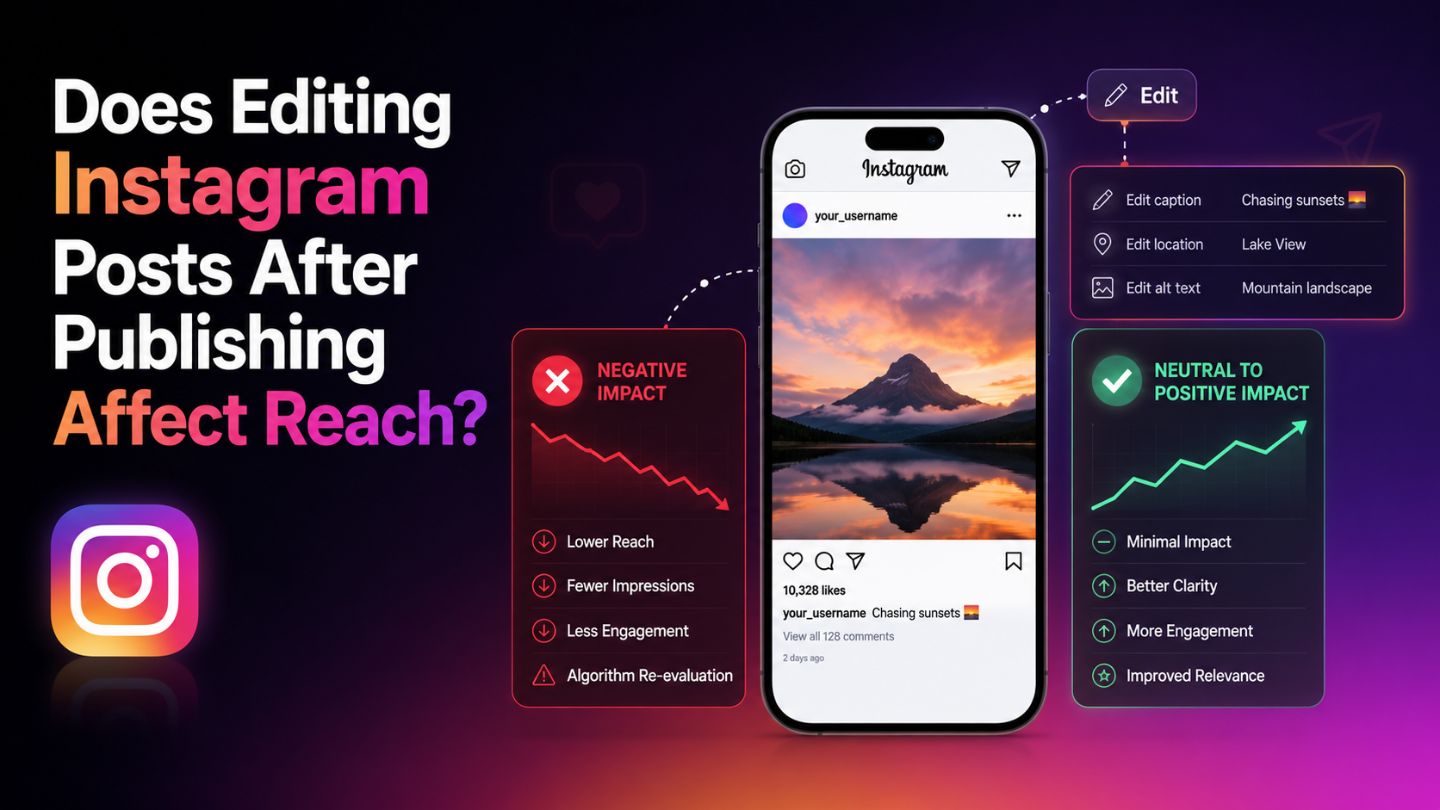
Instagram is constantly evolving, and every small action on the platform can influence how content performs. Many creators and businesses often wonder whether editing captions, hashtags, or tags after publishing can reduce visibility or engagement. This blog outlines how Instagram handles post edits, whether changing content after publishing impacts reach, and what users should know before making updates. Understanding these factors is important for brands trying to maintain engagement, improve performance, and build a stronger online presence. From algorithm behavior to editing best practices, this guide explains how post changes can affect visibility and how to make smarter publishing decisions for long-term growth.
Key Takeaways
- Editing Instagram posts does not automatically reduce reach.
- Major edits immediately after publishing may temporarily affect engagement.
- Caption updates, hashtag changes, and tag edits are usually safe when done strategically.
- Instagram prioritizes engagement quality more than small content modifications.
- Timing and audience interaction still matter more than minor edits.
- Businesses should focus on consistency, relevance, and quality content.
- Proper planning before publishing helps reduce unnecessary edits.
- Professional Social Media Marketing strategies can improve overall content performance.
Understanding How Instagram’s Algorithm Works
Instagram’s algorithm focuses heavily on user engagement, content relevance, and interaction history. The platform studies how users react to posts through likes, comments, shares, saves, and watch time. This early engagement stage is similar to how Instagram tests content before pushing it viral, where a strong audience response can help a post move beyond its initial follower group. If a post performs well shortly after publishing, Instagram is more likely to push it to a wider audience through feeds, Explore pages, and recommendations. This means the first few hours after posting are usually the most important for gaining momentum and visibility.
Many users assume that editing a post interrupts this process completely, but Instagram has never officially stated that post edits directly reduce reach. Instead, the algorithm mainly tracks user behavior and engagement signals. Minor adjustments to captions or hashtags generally do not cause serious visibility issues. However, frequent or unnecessary changes immediately after publishing may slightly interrupt the engagement flow, especially if users stop interacting while the content is being updated.
What Happens When You Edit an Instagram Post?
When a post is edited, Instagram refreshes certain metadata connected to that content. This includes caption details, hashtags, tagged accounts, location information, or alt text. The platform then reprocesses the content to ensure it still follows community guidelines and search relevance standards. In most situations, this process happens quickly and does not create major performance problems for the post.
Problems usually arise when creators make aggressive edits immediately after publishing. For example, replacing the entire caption, adding unrelated hashtags, or changing promotional messaging can sometimes confuse the algorithm’s understanding of the post. While the reach may not collapse completely, engagement speed can slow temporarily because Instagram may need additional time to reassess the content before pushing it further to users.
Does Editing Captions Affect Reach?
Editing captions is one of the most common changes users make after publishing. Sometimes creators notice spelling mistakes, missing information, or unclear messaging after the post goes live. In most cases, correcting these issues does not harm the performance of the content. Instagram expects users to make occasional updates, especially for clarity and accuracy.
The issue becomes more noticeable when captions are heavily rewritten right after publishing. A sudden change in tone, keywords, or topic can affect how Instagram initially categorizes the content. If the algorithm identified the post as educational, promotional, or entertainment-based and the caption changes drastically, the system may need to reevaluate the content. This does not guarantee lower reach, but it can influence how consistently the post continues gaining impressions.
Can Changing Hashtags Reduce Visibility?

Hashtags help Instagram understand what a post is about and which audiences may find it relevant. Many marketers edit hashtags after publishing to improve discoverability or remove banned tags. Instagram generally allows these changes without major penalties, especially when the updates remain relevant to the original topic of the content.
However, excessive hashtag manipulation can create problems. Continuously adding trending but unrelated hashtags may appear spammy and reduce trust signals associated with the post. Instagram’s systems are designed to prioritize authentic content distribution, so irrelevant hashtag stuffing can negatively impact visibility over time. A more effective strategy is choosing targeted hashtags before publishing and only making small adjustments when necessary.
Why Timing Matters More Than Editing
One of the biggest misconceptions about Instagram reach is that editing alone causes low performance. A post’s early performance is often shaped by likes, comments, shares, saves, and watch time, especially when Instagram is measuring whether users are actively responding to the content. In reality, posting time and audience activity usually have a greater impact. If content is shared when followers are inactive, the engagement rate may naturally drop regardless of whether the post gets edited later. Strong initial interaction often determines how widely Instagram distributes content during the first few hours.
Brands that consistently publish during peak audience activity tend to experience stronger engagement and reach. This means planning content schedules carefully is often more important than worrying about occasional edits. Businesses that monitor audience insights and engagement patterns usually perform better because they align their content with user behavior instead of relying solely on algorithm myths.
Read More: Why Your Instagram Engagement Drops After Posting Reels
The Difference Between Minor and Major Edits
Not all Instagram edits affect content in the same way. Small changes like correcting spelling mistakes, adding emojis, updating tags, or adjusting formatting are generally harmless. These updates help improve readability and user experience without significantly altering the content’s meaning or targeting signals.
Major edits are different because they can completely change how Instagram interprets the post. Replacing captions with entirely new messaging, switching hashtags to unrelated topics, or changing promotional intent can confuse the algorithm’s classification process. This is why marketers often recommend reviewing posts carefully before publishing instead of making extensive changes afterward whenever possible.
How Businesses Should Approach Post-Editing
Businesses should approach Instagram editing strategically rather than emotionally. Many brands rush to change captions or hashtags if engagement appears slow within the first few minutes. Before making quick edits, it helps to understand why content is not reaching followers on Instagram, because low visibility can come from timing, audience behavior, weak engagement signals, or inconsistent posting patterns. However, Instagram performance can fluctuate naturally based on competition, audience behavior, and timing. Constantly editing posts out of panic may create unnecessary disruptions without actually improving results.
A smarter approach involves creating well-planned content before publishing. Brands should review captions, hashtags, visuals, and calls to action in advance to reduce the need for edits later. If changes are required, they should remain minimal and relevant to the original content. Consistency and quality matter far more than constant tweaking when building long-term Instagram growth.
Common Instagram Editing Myths
One widespread myth is that Instagram automatically “shadowbans” posts after edits. While users often blame edits for low reach, there is no confirmed evidence proving that normal caption corrections or hashtag updates directly trigger shadowbans. Most visibility drops are actually related to audience engagement patterns, content quality, or inconsistent posting habits.
Another common misconception is that editing within a certain time frame guarantees reduced impressions. Some creators believe editing during the first minute or first hour damages performance permanently. Instagram has never officially confirmed such rules. The platform mainly focuses on authentic engagement and user interest rather than punishing routine updates to published content.
Best Practices for Editing Instagram Posts

The best way to handle Instagram edits is through preparation and moderation. Captions should be reviewed thoroughly before publishing to minimize mistakes and unnecessary changes later. Using content calendars, draft reviews, and hashtag planning tools can help businesses maintain consistency and reduce rushed decisions.
If edits are necessary, they should be made carefully without drastically changing the original context of the post. Small improvements are usually safe and helpful, especially when they improve clarity or user experience. Businesses should also avoid repeatedly editing posts because excessive updates may appear unnatural and reduce audience trust over time.
Read More: Trial Reels on Instagram: How Creators Are Testing Content Before Publishing
How Strong Content Protects Reach
High-quality content remains the biggest factor influencing Instagram reach regardless of edits. Posts that encourage conversations, saves, shares, and meaningful interactions usually perform better, even if minor updates are made later. Instagram’s algorithm prioritizes content that keeps users engaged on the platform for longer periods.
This is why businesses should focus more on storytelling, visuals, audience relevance, and consistency rather than worrying excessively about occasional edits. When content provides value and connects with users authentically, small adjustments after publishing rarely become a major issue. A strong overall strategy consistently delivers better results than trying to manipulate the algorithm through constant changes.
Final Thoughts
Editing Instagram posts after publishing does not automatically reduce reach, but the way edits are handled can influence overall performance. Minor changes such as correcting spelling mistakes, updating hashtags, or refining captions are generally safe when done strategically. Larger edits made immediately after publishing may temporarily affect engagement flow because Instagram may need to reassess the content. Ultimately, audience interaction, timing, content quality, and consistency have a far greater impact on reach than occasional edits.
At The Ocean Marketing, we help businesses build stronger online visibility through professional social media marketing strategies designed for long-term growth and engagement. Our team also offers a free SEO audit to help brands identify opportunities for improving digital performance across platforms. Contact us today to discover how we can strengthen your online presence and create strategies tailored to your business goals.