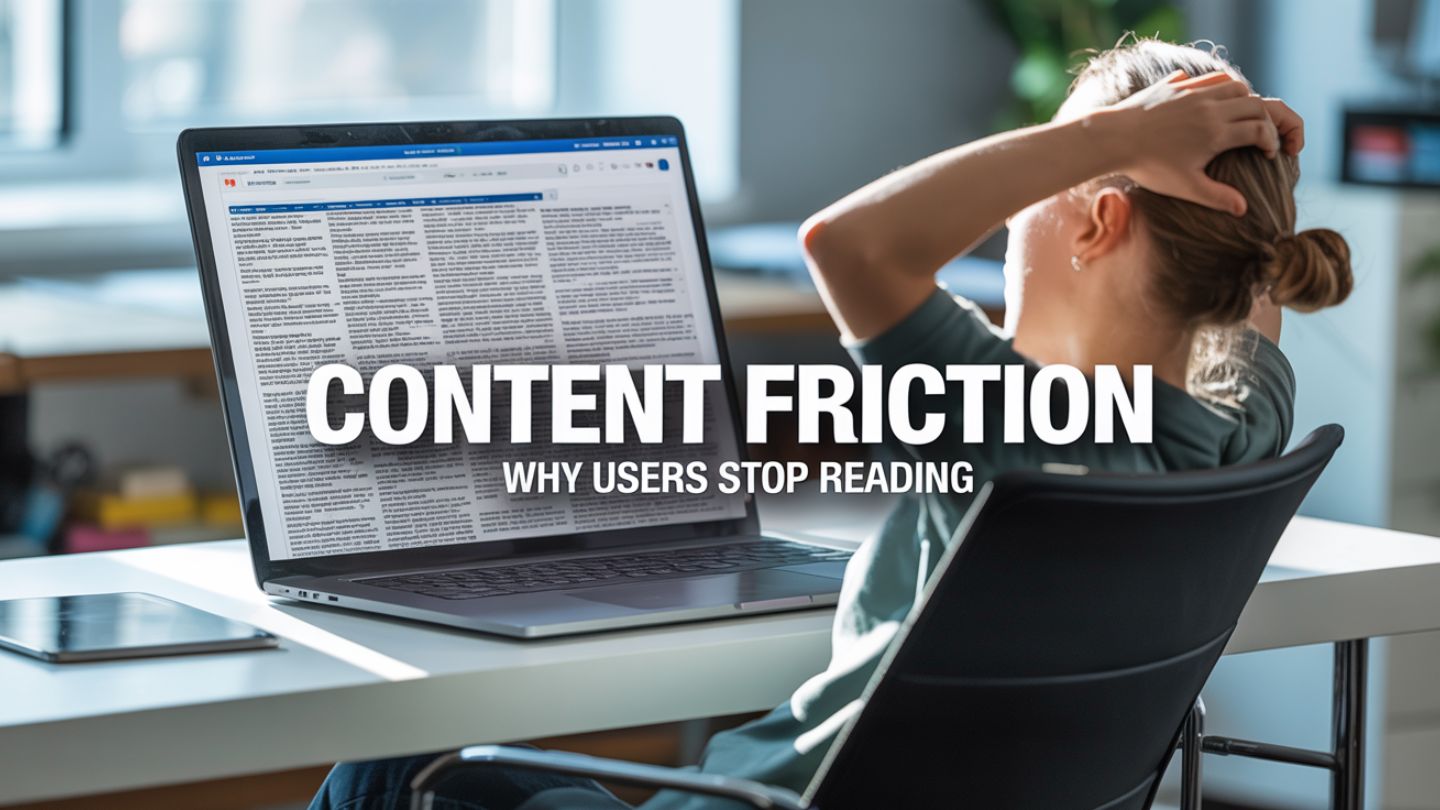
You’ve crafted what you believe is a compelling piece of content. You’ve done your research, polished your prose, and hit publish with a sense of accomplishment. Yet, when you check your analytics, you see a steep drop-off. Readers are arriving, but they aren’t making it to the end. They’re abandoning your page halfway through, leaving your most important messages unseen. This common and frustrating phenomenon is known as content friction.
Content friction is any obstacle that makes it difficult, confusing, or unappealing for a user to continue consuming your content. It’s the digital equivalent of trying to read a book with blurry print or missing pages. When friction becomes too high, users simply give up and go elsewhere. Understanding the causes of this friction is the first step toward creating content that truly engages and retains your audience from the first word to the last.
Key Takeaways
- Content friction occurs when obstacles like poor formatting, confusing language, slow load speeds, or unmet expectations make it difficult for users to continue reading, leading to higher bounce rates and lower engagement.
- Large walls of text and weak structure overwhelm readers, while proper content chunking, clear headings, and scannable formatting make information easier to consume and retain.
- Clear, conversational language builds trust and keeps readers engaged, whereas excessive jargon or overly complex explanations create unnecessary barriers.
What Causes Content Friction?

Friction isn’t caused by a single issue but rather a combination of factors related to structure, presentation, and substance. Pinpointing these problem areas on your own site can dramatically improve user engagement and time on page.
1. The Wall of Text
One of the most significant contributors to content friction is poor formatting. When a visitor lands on a page and is met with a dense, unbroken wall of text, the immediate reaction is often intimidation. It looks like hard work. Without visual breaks, the content feels overwhelming before the user even reads a single sentence.
Large blocks of text are difficult to scan, forcing the reader to invest significant mental energy just to follow along. In an environment where attention is a scarce resource, most users will not make that investment. They will bounce in search of information that is easier to digest.
This is where content chunking for SEO and readability becomes essential. Structuring information into clearly defined sections with purposeful spacing helps guide the reader’s eye and reduces cognitive overload. Well-chunked content feels lighter, more approachable, and far more engaging.
2. Confusing or Unclear Language
Your expertise is a valuable asset, but it can also create a barrier if not communicated properly. Using excessive jargon, technical terminology without explanation, or overly complex sentence structures can alienate a large portion of your audience. When readers have to pause constantly to decipher your meaning, the flow of information is broken.
This friction point arises when there’s a mismatch between your language and the reader’s level of understanding. Content should feel like a helpful conversation, not an academic lecture. If readers feel talked down to or confused by your vocabulary, they will quickly lose interest and confidence in your message.
Following proven tips to write good, high-quality content ensures clarity remains at the forefront. Strong content balances expertise with accessibility, making complex ideas understandable without diluting their value. When readers grasp your message effortlessly, they stay engaged longer.
3. A Lack of Visual Relief
Content is more than just words. A page devoid of images, charts, or other visual elements can feel sterile and monotonous. Visuals serve several crucial functions: they break up text, illustrate complex points, and provide context that words alone cannot.
Think about how much easier it is to understand data from a well-designed graph compared to reading a paragraph full of numbers. Videos, infographics, and even simple pull quotes act as signposts that guide the reader’s eye down the page. They offer moments of rest, making the overall reading experience more enjoyable and less strenuous. Without these elements, the journey through your content can feel like a long, featureless road.
4. Slow Page Load Speed
Content friction begins before a user even reads your headline. If your page takes too long to load, you’ve lost a significant portion of your audience. Modern internet users expect near-instant access to information. Delays of even a few seconds can lead to frustration and abandonment.
Large, unoptimized images, bloated code, and slow server response times are common culprits. No matter how brilliant your writing is, it’s useless if the user clicks away before it ever appears on their screen. Page speed is a foundational element of a positive user experience.
Beyond technical optimization, maintaining consistent content velocity and publishing speed for SEO also plays a role in overall performance. A streamlined content workflow ensures your site stays fresh, relevant, and technically efficient, reinforcing both user trust and search visibility.
5. Content That Doesn’t Deliver on Its Promise
A catchy title or compelling meta description might earn you a click, but it also sets an expectation. If the content on the page fails to deliver on that promise, you create a sense of betrayal. This is a critical form of friction.
For example, if your title is “The Ultimate Guide to Digital Marketing,” but your post only briefly touches on one aspect of social media, users will feel misled. They came looking for a comprehensive resource and found something shallow instead. This mismatch between expectation and reality erodes trust and ensures they won’t stick around or return in the future.
Actionable Solutions to Reduce Content Friction

The good news is that every point of friction has a corresponding solution. By focusing on creating a smoother, more intuitive user experience, you can keep readers engaged and scrolling.
1. Prioritize Scannability
Break down your walls of text. Make your content easy to scan so users can quickly find the information they need.
- Use Short Paragraphs: Keep paragraphs to 3–4 sentences max.
- Write Clear Headings: Use descriptive H2s and H3s to structure your content logically.
- Leverage Bullet Points: Present information in a digestible format.
- Bold Key Phrases: Emphasize important takeaways to draw the reader’s attention.
2. Write for Clarity and Connection
Adjust your writing style to match your audience. The goal is to communicate, not to impress.
- Use Active Voice: Write direct, energetic sentences.
- Simplify Your Language: Choose clear words over complex ones.
- Read It Aloud: Identify awkward phrasing and run-on sentences.
3. Integrate Meaningful Visuals
Enhance your text with visual elements that add value and improve readability.
- Relevant Images: Use high-quality images that support your content.
- Data Visualization: Turn statistics into charts or infographics.
- Videos: Demonstrate processes or explain complex topics clearly.
4. Optimize for Performance
Ensure your content loads quickly for every user on any device.
- Compress Images: Reduce file sizes without sacrificing quality.
- Enable Caching: Store static elements for faster repeat visits.
- Choose Reliable Hosting: Fast server response times improve overall experience.
5. Fulfill Your Content’s Promise
Build trust by being transparent and delivering on your commitments.
- Align Title and Content: Headlines should accurately reflect the article.
- Provide Depth: Cover your topic thoroughly and meaningfully.
- Answer the User’s Question: Solve the reader’s problem clearly and effectively.
Final Thoughts
Content friction is often the hidden reason users leave mid-page. From overwhelming walls of text and unclear language to slow load times and unmet expectations, small obstacles can quickly add up and drive readers away. By improving formatting, simplifying your message, integrating visuals, optimizing performance, and delivering on your promises, you create a seamless reading experience that keeps visitors engaged from beginning to end. When content feels effortless to consume, users stay longer, trust your brand more, and are far more likely to take action.
At The Ocean Marketing, our expertise in strategic content writing ensures every piece of content is crafted with clarity, structure, and performance in mind. We don’t just write for search engines, we write for people, blending engagement with measurable SEO results. If you’re unsure where friction may be affecting your website’s performance, a free SEO audit can uncover hidden issues impacting readability, engagement, and rankings. Ready to transform your website into a high-performing, engagement-driven platform? Contact us today and let’s build content that keeps your audience reading and converting.