Skip to content
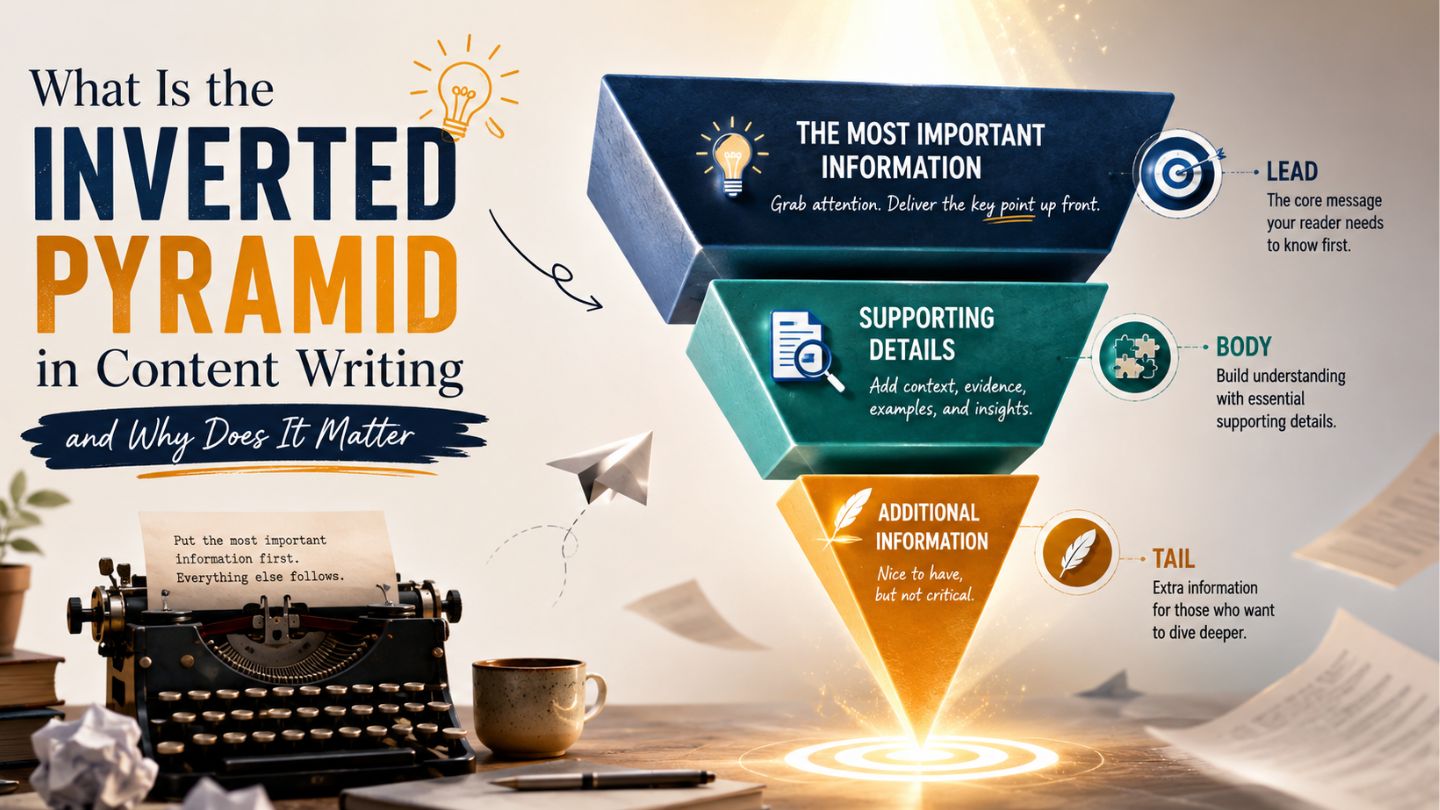
Online readers rarely stay on a webpage if the content takes too long to deliver value. That is why writers and marketers use the inverted pyramid structure to make content clearer, faster, and more engaging from the very beginning. This blog outlines what the inverted pyramid in content writing means, why it matters for modern websites, how it improves readability and SEO, and the ways businesses use it to keep audiences interested online. Whether you are writing blogs, landing pages, or website copy, understanding this structure can help you create content that feels more organized, useful, and easier for readers to follow.
Key Takeaways
- The inverted pyramid places the most important information first.
- It improves readability, SEO, and reader engagement.
- Readers stay longer when content feels easy to scan.
- Businesses use it to increase conversions and reduce bounce rates.
The Inverted Pyramid Is Basically “Get to the Point”
Nobody opens a blog hoping to read three paragraphs of unnecessary buildup before finding the actual answer. Online readers want value immediately, and the inverted pyramid structure is built around that behavior. Instead of slowly leading readers toward the main point, this method puts the most important information right at the top and then adds supporting details afterward. It feels direct, useful, and far more engaging for modern audiences.
This style originally came from journalism, where reporters needed to deliver the biggest news first in case readers stopped halfway through the article. Digital content writers adopted the same approach because website visitors behave the same way. People skim headings, scroll quickly, and decide within seconds whether they want to continue reading or leave the page entirely.
Why This Writing Style Works So Well Online

The internet has made attention spans shorter than ever. Readers jump between tabs, notifications interrupt them constantly, and most people are multitasking while browsing content. If a blog feels slow or difficult to read, they simply leave and find another website that gives answers faster. The inverted pyramid works because it respects the reader’s time instead of making them work to find useful information.
This structure also makes content feel lighter and easier to consume. Readers don’t feel trapped inside huge walls of text because the information flows naturally from important points into supporting details. Even if someone only reads the introduction and a few headings, they still walk away understanding the core message of the article.
Quick Benefits of the Inverted Pyramid
- Makes blogs easier to scan
- Improves reader retention
- Keeps introductions more engaging
- Helps search engines understand content faster
Your Introduction Can Make or Break the Entire Blog
One of the biggest mistakes content writers make is wasting the introduction. Some blogs spend hundreds of words circling around the topic before finally explaining why the reader should care. That approach usually fails online because readers lose patience long before the article reaches the point. A strong inverted pyramid introduction instantly tells readers what the blog is about, why it matters, and what they’ll gain from reading further.
That immediate clarity builds trust because readers feel confident they’re in the right place. When the opening paragraph delivers value quickly, the rest of the article becomes much easier to follow and enjoy. A strong opening also supports lower bounce rates because readers can instantly understand why the page matters. When intro sections reduce bounce rate instantly, the rest of the blog has a better chance of holding attention and guiding readers through the topic naturally.
Readers Love Content That Feels Effortless
Good writing doesn’t feel like hard work to the reader. The best blogs guide people through information naturally without overwhelming them with unnecessary explanations or cluttered paragraphs. The inverted pyramid helps create a smooth experience because every section feels organized and purposeful rather than random. Readers are far more likely to continue scrolling when content feels simple to navigate. Clear headings, direct openings, and logical flow keep the article moving forward without making the audience feel exhausted halfway through.
That balance between structure and readability is what separates strong content from forgettable content. This is also why skimmable content plays such an important role in digital writing. When headings, paragraph flow, and formatting are easy to follow, skimmable content boosts engagement and conversions without making the article feel forced or overloaded.
Search Engines Actually Prefer This Structure Too
The inverted pyramid is not only good for readers. Search engines also favor content that provides quick and relevant answers. Google wants users to find useful information fast, which means organized content often performs better than articles buried under fluff and unnecessary wording.
When the main topic appears early in the blog, search engines can understand the content faster and connect it with relevant searches. Structured headings and clear paragraph flow also improve crawlability, making it easier for search engines to evaluate the page. In simple terms, a better structure often creates better SEO opportunities.
Read More: How Content Tone Impacts Dwell Time and Rankings
Why SEO Benefits From It
- Important keywords appear naturally near the top
- Clear structure improves crawlability
- Readers stay longer on the page
- Lower bounce rates can improve engagement signals
The Structure Keeps Blogs From Feeling Repetitive
A lot of blogs become boring because they keep repeating the same idea in slightly different ways. The inverted pyramid helps prevent that problem because the structure forces writers to organize information properly. The most important point comes first, supporting ideas come next, and extra details stay lower in the article where they belong. That flow keeps the content moving instead of circling around the same message repeatedly. Readers stay more interested because each section adds something new rather than recycling previous information.
Strong structure creates rhythm inside the article, and rhythm is what makes long-form content easier to enjoy. The balance between useful detail and simple structure matters because readers do not want content that feels shallow or difficult to follow. Content depth and clarity become important here, since the best blogs explain the topic well while still keeping the message clean and easy to understand.
Headlines Matter More Than Most Writers Realize
A boring heading can ruin an otherwise great blog. Readers use headings like checkpoints while scanning the page, which means every heading needs to create curiosity or clearly promise value. Generic titles such as “Benefits” or “Conclusion” often feel flat because they don’t give readers a reason to continue.
Interesting headings keep momentum alive throughout the article. They make the blog feel more conversational, energetic, and engaging instead of sounding like a school assignment. Strong headings combined with the inverted pyramid structure create content that feels easier and more enjoyable to read from start to finish.
Businesses Use This Style to Increase Conversions
Businesses care about attention because attention leads to conversions. Whether someone is selling services, products, or information, they only have a short amount of time to convince visitors to stay on the page. The inverted pyramid helps businesses communicate value quickly before potential customers lose interest.
This is especially important for service pages and marketing blogs. When businesses explain the most important information first, visitors understand the offer faster and feel more confident exploring further. That improved clarity can lead to stronger engagement, better trust, and higher conversion opportunities over time.
Long Blogs Still Need to Feel Easy to Read
A 1500-word article should never feel like a chore. Readers don’t mind long content when the structure keeps things flowing naturally. What they dislike is dense writing that feels repetitive, confusing, or overloaded with unnecessary details. The inverted pyramid helps long blogs stay readable because every section feels intentional.
Writers can also improve readability by mixing paragraphs with occasional bullet points, adding stronger subheadings, and keeping sections focused on one central idea. Small formatting choices make a huge difference in how readers experience the content, especially on mobile devices, where large text blocks feel even heavier.
Read More: SEO Content Length: How Long Should a Blog Be?
The Biggest Mistake Writers Make With This Method

Some writers misunderstand the inverted pyramid and think it means giving away everything immediately with no depth afterward. That is not the goal at all. The purpose is to hook readers with valuable information early and then expand on that value in a more detailed and engaging way throughout the article.
A strong blog still needs personality, examples, and interesting explanations. The structure simply changes the order in which information is delivered. Instead of saving the important points for the end, the writer gives readers useful insights immediately and then builds the article outward from there.
Final Thoughts
The inverted pyramid remains one of the most effective content writing techniques because it matches the way people consume information online. Readers prefer content that gives important details quickly without forcing them to search through unnecessary filler. From improving readability and engagement to supporting better SEO performance, this structure helps writers create blogs that feel more valuable, organized, and easier to read from start to finish.
At The Ocean Marketing, we create SEO driven strategies and professional content writing solutions that help businesses improve visibility, engagement, and online growth. We also offer a free SEO audit to help brands identify opportunities for stronger digital performance and better search rankings. Contact us today and let us help you create content that truly connects with your audience.