Skip to content
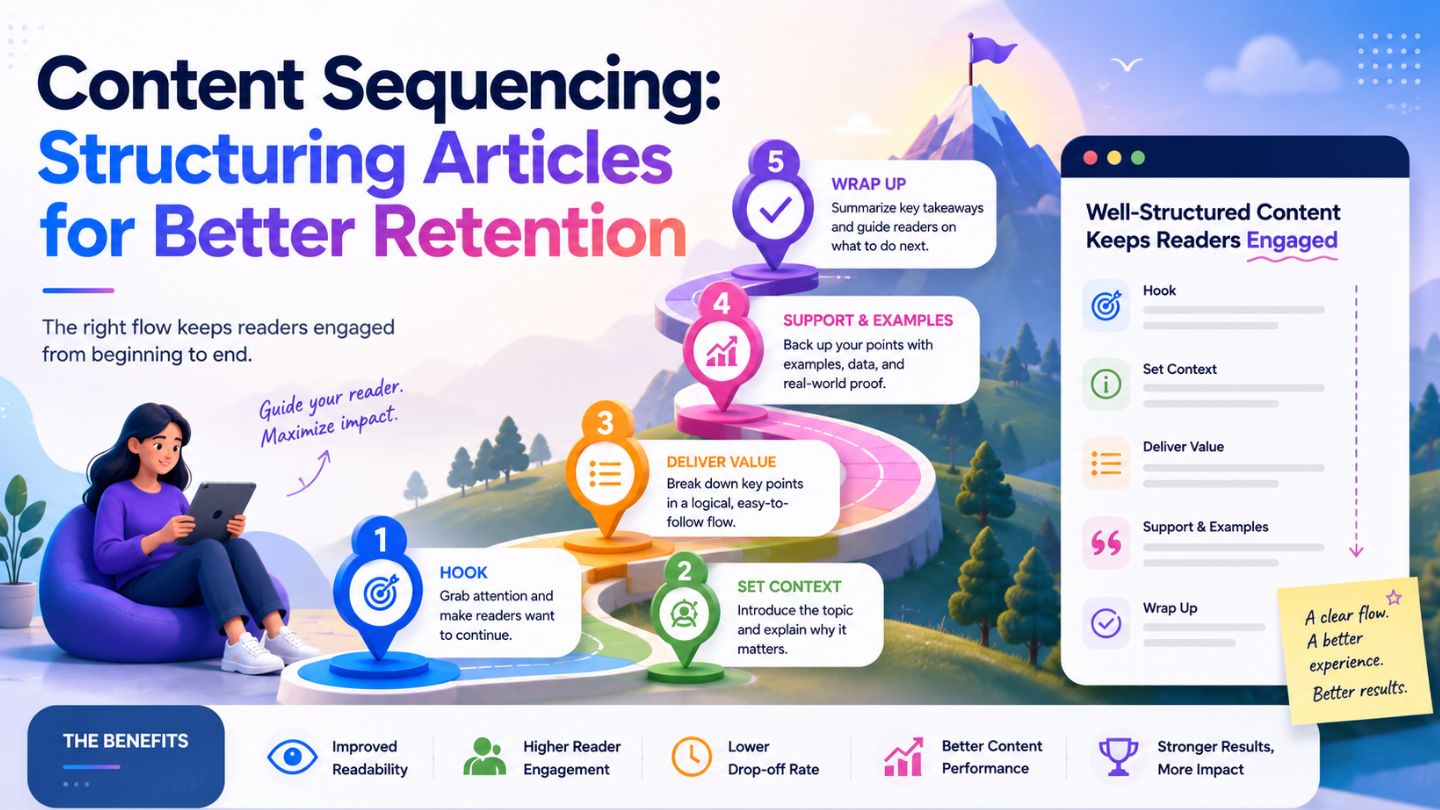
Readers rarely stay on a webpage that feels disorganized or difficult to follow. Content sequencing plays a major role in helping visitors absorb information naturally while keeping them engaged from beginning to end. This blog outlines how structured article flow improves readability, increases engagement, and supports stronger audience retention across digital platforms. From headline arrangement to paragraph transitions, every section of a blog contributes to the reader’s experience. Businesses that prioritize organized writing often see improved user interaction, stronger authority, and better search performance because readers can navigate information without confusion or unnecessary repetition.
Key Takeaways
- Content sequencing improves readability and keeps users engaged longer.
- Well-structured articles guide readers naturally from one point to another.
- Logical content flow supports better audience retention and understanding.
- Headings and transitions help reduce bounce rates on blog pages.
- Organized articles improve the effectiveness of SEO strategies.
- Balanced formatting makes long-form content easier to consume.
- Proper sequencing increases the chances of readers reaching the CTA.
- Strong article structure enhances credibility and user experience.
Why Content Sequencing Matters in Modern Blogging
Content sequencing is more than arranging paragraphs under headings. It is the process of guiding readers through information in a logical and engaging manner that keeps them interested until the final section. Readers today scan content quickly, and if the structure feels confusing, they often leave before understanding the value being offered. A well-sequenced article creates a smooth reading journey where every section builds naturally on the previous one. This improves engagement while helping readers retain information for longer periods.
Structured sequencing also contributes to the emotional rhythm of a blog. Starting with relatable problems, introducing valuable insights, and ending with actionable solutions helps readers stay mentally connected throughout the article. When content flows naturally, readers feel less overwhelmed and more inclined to continue reading. Businesses that invest in proper sequencing often notice stronger interaction rates because visitors appreciate content that respects their time and attention span.
The Role of Introductions in Reader Retention
The introduction acts as the gateway to the entire article, making it one of the most important parts of content sequencing. Readers decide within seconds whether a blog deserves their attention, which means the opening section must immediately establish relevance and clarity. An effective introduction briefly explains the topic while setting expectations for what the reader will gain by continuing. It should create curiosity without sounding exaggerated or repetitive.
Strong introductions also help create consistency between the headline and the article itself. When readers feel that the opening accurately reflects the promised topic, trust begins to develop naturally. This trust encourages readers to move deeper into the article and engage with the content more seriously. Clear introductions with focused messaging reduce confusion and prepare readers for the structure that follows, making the entire reading experience smoother and more enjoyable.
Using Headings to Create Logical Flow
Headings are essential for breaking down information into manageable sections that readers can process easily. Long blocks of uninterrupted text can feel intimidating, especially in digital formats where attention spans are shorter. Well-crafted headings guide readers through the article by clearly signaling what each section will discuss. This structure allows users to navigate content comfortably without feeling lost or overwhelmed during the reading experience. Effective headings also support content retention by helping readers mentally organize information.
When topics are divided logically, readers can absorb key ideas step by step instead of trying to process everything at once. Clear headings improve skimming behavior as well, which is important because many visitors scan articles before deciding to read them fully. Blogs with organized headings appear more professional, easier to understand, and more trustworthy to both readers and search engines. This structure also supports how skimmable content boosts engagement and conversions, because readers can quickly identify the information that matters most without losing interest.
Building Engagement Through Transitional Content

Transitions are often overlooked in content writing, yet they are critical for maintaining reader engagement. Abrupt topic changes can interrupt the reading flow and cause readers to lose interest quickly. Transitional sentences connect ideas smoothly, helping readers understand how one section relates to the next. These connections create a conversational rhythm that keeps the article feeling cohesive rather than fragmented or disconnected.
Strong transitions also improve comprehension because they reinforce the article’s direction. Readers appreciate content that feels intentional and thoughtfully arranged instead of randomly assembled. Transitional phrases, supporting context, and logical sequencing help maintain momentum across longer articles. This is especially important in educational or informative blogs where multiple concepts need to be explained without confusing the audience or making the reading experience feel exhausting.
Read More: How to Write Intro Sections That Reduce Bounce Rate Instantly
How Paragraph Structure Influences Retention
Paragraph structure directly affects how easily readers process information online. Overly short paragraphs can make content feel choppy, while excessively long ones can discourage readers from continuing. Balanced paragraph lengths create visual comfort while supporting better understanding. Readers are more likely to stay engaged when ideas are explained thoroughly without appearing crowded or difficult to follow on the screen. Balanced paragraph flow works closely with how content chunking improves readability and engagement, helping readers process ideas in sections that feel clear, useful, and easy to follow.
Well-developed paragraphs also allow writers to explore ideas with enough depth to provide genuine value. Each paragraph should focus on a single idea while connecting naturally to surrounding sections. This creates clarity and prevents unnecessary repetition throughout the article. When readers can follow thoughts without interruption or confusion, they remain engaged longer and are more likely to remember the information presented after finishing the blog.
Sequencing Content for SEO Performance
Search engines prioritize user experience, which means content sequencing indirectly influences SEO performance. Articles with clear structure, logical progression, and readable formatting tend to keep users on the page longer. Longer engagement signals to search engines that the content provides value to readers. This can contribute to improved visibility and stronger rankings over time for relevant search queries.
Proper sequencing also helps integrate keywords naturally throughout the article. Instead of forcing phrases awkwardly into random sections, structured content allows keywords to appear where they make contextual sense. This improves readability while supporting optimization efforts. Businesses focusing on SEO and content writing often achieve better long-term results when content is designed for both search engines and human readers instead of prioritizing one over the other.
Keeping Readers Interested With Balanced Formatting
Formatting plays a major role in how readers interact with long-form content. Articles that combine paragraphs, bullet points, subheadings, and spacing create a more visually appealing reading experience. Readers are more willing to continue through lengthy articles when the layout feels organized and accessible. Balanced formatting reduces fatigue while making information easier to absorb and revisit later.
Visual structure also helps highlight important information without overwhelming the audience. Strategic use of formatting encourages readers to pause, reflect, and continue naturally through the article. Content that appears clean and thoughtfully arranged communicates professionalism and authority. This makes readers more likely to trust the information presented and remain engaged until the final section or call to action.
The Psychology Behind Content Retention
Content retention is strongly connected to how information is presented and organized. Readers remember information more effectively when ideas are introduced progressively rather than all at once. Structured sequencing reduces cognitive overload by allowing readers to process smaller sections of information in a logical order. This creates a smoother learning experience that improves understanding and long-term recall.
Emotional engagement also influences retention significantly. Stories, relatable examples, and conversational flow help readers connect with content on a deeper level. When readers feel connected emotionally or intellectually, they are more likely to stay engaged and remember key points later. Effective sequencing combines logical organization with engaging storytelling techniques to create content that feels informative, valuable, and memorable.
Read More: Content Personalization: What It Is & How to Do It
Common Sequencing Mistakes to Avoid
One of the most common mistakes in blog writing is introducing information without a clear direction or purpose. Articles that jump between unrelated points can confuse readers and weaken engagement quickly. Repetition is another issue that damages readability because readers may feel the content lacks originality or meaningful structure. Strong sequencing avoids these problems by maintaining consistent flow and intentional organization throughout the article. Poor sequencing often explains why users stop reading mid-page, especially when the content lacks smooth transitions, clear direction, or enough structure to keep attention moving forward.
Another common problem is overcrowding sections with excessive information. Readers need breathing space between concepts to fully absorb what they are learning. Overloading paragraphs with too many ideas can reduce retention and make content harder to follow. Writers should focus on clarity, logical progression, and balanced pacing to ensure readers stay interested without feeling mentally exhausted during the reading process.
Creating Strong CTAs Through Strategic Placement

A well-sequenced article naturally guides readers toward the call to action instead of presenting it abruptly. When readers have moved through organized sections that educate and engage them, they are more receptive to the final message. The CTA should feel like a logical continuation of the content rather than a disconnected sales pitch placed at the end of the article without context.
Strategic placement also ensures readers reach the CTA without losing interest midway through the blog. Strong sequencing keeps engagement levels steady so readers remain invested until the conclusion. Businesses that focus on structured content often achieve better conversion opportunities because readers feel informed, comfortable, and confident by the time they encounter the final recommendation or contact invitation.
Final Thoughts
Content sequencing is essential for creating articles that readers genuinely enjoy and remember. Organized structure, smooth transitions, balanced formatting, and logical progression all contribute to stronger engagement and better retention. When blogs are thoughtfully arranged, readers can navigate information naturally without feeling overwhelmed or distracted. Effective sequencing improves readability while supporting stronger audience trust, longer page interaction, and more meaningful communication between businesses and their readers.
At The Ocean Marketing, we understand the importance of strategic SEO and content writing that keeps readers engaged while improving online visibility. Our team also provides a free SEO audit to help businesses identify opportunities for stronger digital performance and content effectiveness. Contact us today to create content strategies that help your brand stand out and connect with the right audience.