Skip to content
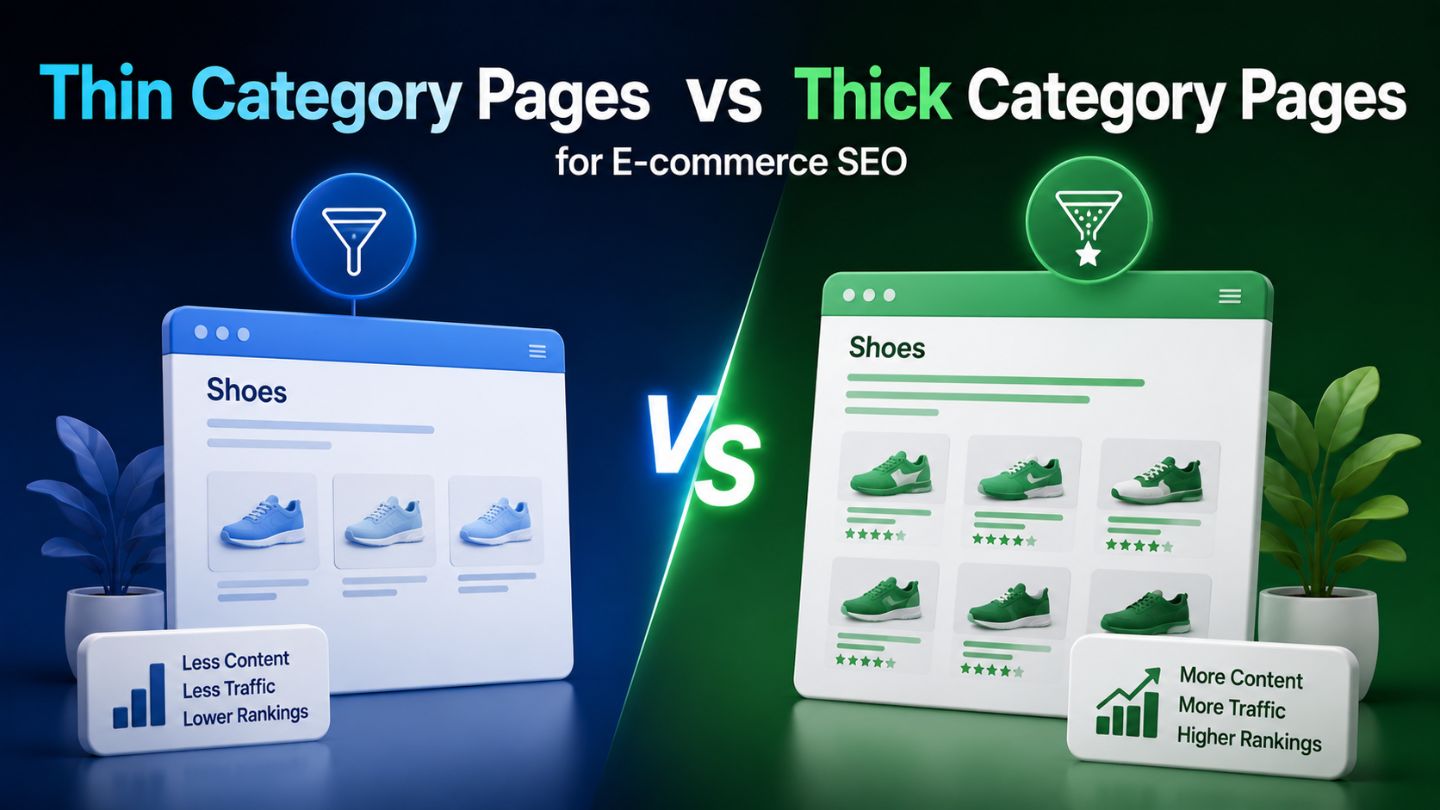
Category pages play a major role in shaping how e-commerce websites perform in search engines and how users navigate products online. This blog outlines the differences between thin and thick category pages, their impact on rankings, user engagement, and long-term ecommerce growth. While some businesses rely on basic category layouts with limited information, others build detailed category experiences that support both customers and search visibility. Understanding which structure works best can help ecommerce brands improve conversions, reduce bounce rates, and strengthen authority in competitive markets. The right category page strategy is not only about design but also about creating valuable content that supports modern e-commerce SEO goals.
Key Takeaways
- Thin category pages contain minimal content and often struggle to rank competitively
- Thick category pages provide detailed information that improves user experience and SEO performance
- Search engines favor category pages that offer value beyond product listings
- Content depth can improve keyword relevance and internal linking opportunities
- User engagement metrics often improve with well-structured thick category pages
- E-commerce websites should balance informative content with clean navigation
- Category page optimization helps support long-term organic traffic growth
- Strategic category page content can improve authority and conversion rates
Understanding Thin Category Pages
Thin category pages are e-commerce pages that contain very little unique information apart from product listings. These pages usually include a short heading, a few product thumbnails, and limited descriptive content. Many online stores create thin pages quickly to organize products without considering how search engines evaluate page quality. While this structure may help basic navigation, it often lacks the context that users and search engines need to understand the value of the page. Thin pages are especially common on large e-commerce websites with hundreds of product categories created automatically through templates.
The biggest challenge with thin category pages is their inability to compete in search results for valuable keywords. Search engines prioritize pages that provide useful and relevant information to users rather than pages that only display products. When category pages have little content, they may appear duplicate, unhelpful, or low quality in search engine algorithms. This can reduce visibility, limit organic traffic potential, and create missed opportunities for ranking broader commercial search terms. Thin pages may also increase bounce rates because visitors cannot quickly find educational or supporting information before making purchasing decisions.
What Makes a Thick Category Page Different?
Thick category pages are designed with both user experience and search optimization in mind. These pages combine product listings with meaningful written content, helpful navigation elements, FAQs, buying guides, filters, and supporting resources. Instead of relying solely on products to communicate relevance, thick pages provide detailed context around the category topic. This helps search engines understand the page better while giving users additional confidence when browsing products.
The added information also allows businesses to target more keyword variations naturally within the page structure. A strong, thick category page does not overwhelm users with unnecessary text. Instead, it strategically places content in areas that support the customer journey without interrupting shopping behavior. Many successful e-commerce websites include introductory content near the top of the page and detailed explanations further down the page.
This layout creates a balance between usability and optimization. Thick pages also allow brands to highlight product benefits, usage recommendations, comparisons, and industry insights that encourage customers to spend more time exploring products and categories. A strong content structure also supports optimizing e-commerce category pages by helping brands combine product visibility, keyword relevance, and user-focused information in one useful page experience.
How Thin Pages Affect E-commerce SEO
Thin category pages often struggle to establish authority because they provide limited topical relevance. Search engines evaluate page quality based on factors such as originality, usefulness, and user engagement. When a category page contains little more than product names and images, it becomes difficult for algorithms to determine why the page deserves higher rankings. In highly competitive e-commerce industries, this lack of supporting information can prevent pages from ranking for important commercial keywords that drive purchasing traffic.
Another issue with thin pages is poor internal linking opportunities. Detailed category pages naturally support related articles, buying guides, and product collections, showing how internal linking boosts SEO and authority across important ecommerce pages. Thin pages, however, leave little room for contextual links that improve crawlability and keyword relationships across the website. This can weaken overall SEO performance over time. Thin pages may also create indexing issues if search engines view multiple category pages as nearly identical due to repetitive templates and limited content differentiation.
Why Thick Pages Improve Search Visibility

Thick category pages improve search visibility because they provide more signals that search engines can analyze for relevance and quality. Rich content allows websites to naturally include primary keywords, related search phrases, and semantic terms without keyword stuffing. This broader contextual coverage helps category pages rank for multiple search queries instead of relying on a single keyword target. Search engines also reward pages that answer user intent comprehensively, and thick pages are better equipped to provide that experience.
User behavior metrics also tend to improve with detailed category pages. Visitors who find helpful information are more likely to remain on the site longer, explore additional products, and engage with related resources. Increased engagement sends positive signals that can support ranking improvements over time. Thick pages also create opportunities for featured snippets, FAQ visibility, and long-tail keyword rankings that thin pages rarely achieve. These benefits contribute to stronger ecommerce performance and more sustainable organic traffic growth.
User Experience Matters More Than Ever
Modern e-commerce SEO is closely connected to user experience, which means category pages should support both discovery and decision-making. Thin pages often fail to provide enough information for users who are comparing products or researching before purchasing. Visitors may leave the site if they cannot quickly understand product categories, benefits, or differences. This creates lost opportunities for conversions and customer trust. E-commerce businesses that prioritize experience usually see stronger engagement and repeat visits.
Thick category pages create a more informative shopping environment by helping users understand the category before exploring products in detail. Content such as buying considerations, product applications, feature explanations, and common questions reduces confusion during the browsing process. This improves customer confidence and supports better purchasing decisions. A well-designed thick category page can guide visitors naturally toward products while also strengthening the authority and credibility of the e-commerce brand.
Read More: How Search Intent Changes During Different Buying Stages
The Role of Content Placement on Category Pages
One common concern about thick category pages is whether too much content will distract users from products. The solution lies in strategic content placement rather than excessive writing. Successful e-commerce websites often place concise introductory content near the top of the page while positioning longer explanations further below the product grid. This structure allows visitors to access products immediately while still benefiting from detailed information if needed. Search engines can still crawl and evaluate the additional content effectively.
Expandable content sections, FAQs, and buying guides are also useful for maintaining a clean user interface. These features allow e-commerce businesses to include valuable information without overcrowding the page visually. Well-structured content placement improves readability and keeps the page focused on conversions while supporting SEO objectives. Businesses should aim for balance rather than treating category pages as either purely informational or purely transactional environments.
Common Mistakes When Building Thick Pages
Some e-commerce websites misunderstand thick pages and overload category pages with unnecessary or repetitive text. This can reduce readability and negatively affect user experience. The purpose of thick content is not simply increasing word count but providing meaningful value related to the products and category topic. Generic filler content, excessive keyword repetition, and irrelevant paragraphs can make category pages appear unnatural and difficult to navigate. Quality always matters more than quantity.
Another common mistake is ignoring mobile usability while expanding category page content. Many e-commerce users browse products on mobile devices, so thick pages must remain easy to scroll and navigate across all screen sizes. Businesses should focus on clean formatting, proper spacing, structured headings, and concise paragraphs that support readability. Well-organized content improves both usability and SEO performance while maintaining a professional e-commerce experience.
Read More: How to Optimize E-commerce Category Pages for SEO
Finding the Right Balance for E-commerce Success

The best ecommerce category pages combine informative content with strong product presentation. Businesses do not need extremely long pages to achieve strong SEO performance, but they do need enough useful information to demonstrate relevance and authority. Every category page should answer user intent while guiding visitors toward products naturally. Content should support shopping decisions rather than distract from them.
Finding this balance creates category pages that perform effectively for both users and search engines. E-commerce websites should also regularly review category page performance using analytics and SEO tools. Monitoring rankings, engagement metrics, and conversion behavior helps businesses understand whether category pages are meeting customer expectations.
Optimization should be treated as an ongoing process rather than a one-time update. As search engine algorithms evolve and customer behavior changes, category pages should continue adapting to maintain visibility and competitiveness in e-commerce markets. Regular reviews can also reveal missing subtopics, weak page sections, and keyword opportunities, making content gap analysis for e-commerce SEO valuable when improving thin category pages into stronger, more helpful resources.
Final Thoughts
Thin category pages may help organize e-commerce products, but they rarely provide the depth needed to compete effectively in modern search results. Thick category pages offer stronger opportunities for keyword relevance, user engagement, internal linking, and conversion support. By creating category pages with meaningful content and strategic structure, ecommerce businesses can improve both visibility and customer experience while building long-term authority in competitive industries.
The Ocean Marketing helps businesses strengthen their digital presence through professional SEO strategies designed for long-term growth. We also provide a free SEO audit to identify opportunities that improve website performance and e-commerce visibility. Contact us today to discover how we can help your business achieve stronger online results.